On this page
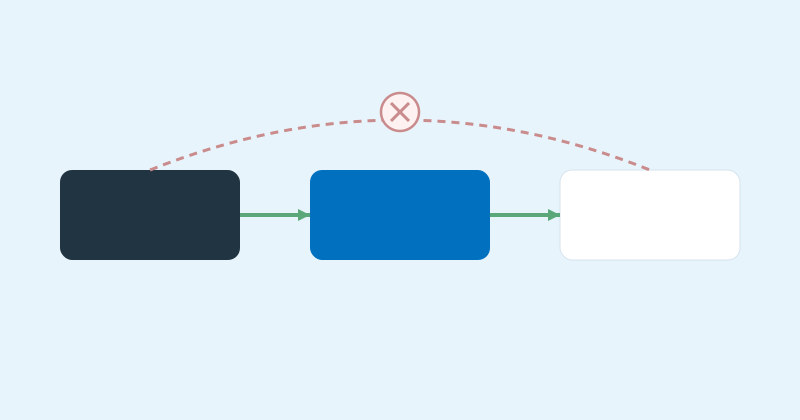
Three different things get called an Amrod catalogue online: a catalogue you page through, a storefront on the supplier's own site, and a shop on your own domain carrying your prices. Only the third can quote, take an order, or earn you a search result.
Only one of the three is a shop you own
An Amrod catalogue on your own website means the products, your selling prices and a way to order, all under your own domain. That is a different thing from a catalogue you page through, and a different thing again from a storefront hosted on the supplier's website.
All three exist. They do different jobs, and the words get used interchangeably, which is why resellers end up with something that does not do what they expected.
The three things people mean
When a reseller says they want the Amrod catalogue online, they usually mean one of these.
- A digital catalogue. The range, in a form you can look through and send to somebody.
- A supplier storefront. A branded page on the supplier's own website showing the range under your company name.
- Your own catalogue website. The range on your domain, at your prices, where a customer can build and send an order.
The first two are free or close to it. The third is a build. Knowing which one you actually need saves a lot of wasted conversation.
What the printed and digital catalogues do
Amrod publishes catalogues, and they are good at what they are for: browsing the range, seeing what exists, showing a customer a product on a screen or a page.
What they cannot do is quote. There are no prices of yours in them, because your cost depends on your own account and your markup is your business. So the catalogue shows the customer a product and then the conversation moves to email, where you work out the price by hand.
They also age. A catalogue is a snapshot of a range that changes: lines are discontinued, new ones arrive, and stock moves during the day. Emailing a customer a document that was accurate last month is how you end up quoting something that is no longer available.
What a supplier storefront does
Amrod also runs storefronts for resellers on its own site, at promoafrica.com, at an address like promoafrica.com/yourcompany. If you have one, it shows the range with your company name on it.
Checked in September 2026, a reseller storefront there carries no prices, no cart, no quote request and no customer login. It shows products and colour-level stock, and that is the extent of it.
Two consequences follow.
It cannot take an order. A customer who finds a product still has to contact you separately, and you still price the job by hand.
It is not your website. It sits on the supplier's domain, so the visits, the links and any search results it earns belong to that domain rather than yours. If you spend money driving people to it, you are improving somebody else's asset.
For showing somebody the range, it does the job and it costs nothing. For being found and taking orders, it does not.
What your own catalogue website does
The third option is the range on your own domain, connected to your own Amrod account.
The practical difference is that the products carry your selling prices, calculated from your own cost with your own markup rules, and a customer can specify an order rather than send an enquiry.
A bulk clothing order is rarely one product in one size. It is a spread across colours and sizes, and the difference between a customer describing that in an email and a customer entering it into a grid is the difference between three days of back and forth and one request that arrives ready to price.
The other difference is that it is yours. Search engines index your domain. Customers bookmark your address. The content you write accrues to your business.
How the catalogue gets onto your site
Amrod publishes an API, and a reseller with access granted against their account can read the catalogue from it: products, variations, categories, brands, images, the prices for that account and stock at variation level.
A website built on that reads the data on a schedule rather than asking a person to maintain it. In practice that means a full catalogue refresh overnight, stock refreshed through the day, and new and discontinued lines handled without anyone noticing they happened.
Two limits are worth stating plainly, because they shape what any such website can be.
The API is read only. Amrod Support confirmed on its own developer forum in November 2025 that the Vendor API has no order-entry capability. Whatever your website does, somebody on your side still places the order with Amrod. Any proposal suggesting otherwise has not read the documentation.
Prices are account-specific. The API returns the prices for the account calling it, so two resellers running identical websites see different costs. That is the right behaviour, and it removes the job of maintaining a price list, but it does mean a catalogue site has to be connected to your account rather than to a shared feed.
What stays your decision
Putting the catalogue online does not hand your business over to a system. Several things stay yours.
- Which products appear. The full range, or the categories and brands you actually sell.
- What they sell for. A default markup, then different rules by brand or category, with volume breaks and a floor you set.
- Whether prices show at all. Some resellers publish, some quote. Both work, and it is a commercial decision rather than a technical one.
- What the pages say. The supplier's product description is a starting point, not a sentence you are stuck with.
Which one do you need?
Three questions settle it.
If you need to show a customer what exists, the catalogue already does that and you do not need to build anything.
If you want a tidy page under your name to send people to, and you are content that it lives on the supplier's domain and cannot quote, the free storefront covers it.
If customers are finding your competitors before they find you, or if quoting a spread of sizes and colours is eating your week, those are the two problems a catalogue website on your own domain actually solves. Nothing else on this page does.
Questions we get asked about this
Can I download the Amrod catalogue as a file?
Amrod publishes catalogues for browsing and printing, and resellers with API access can read the catalogue data directly. A downloaded PDF is a snapshot: it is out of date the moment prices or stock move, which is the main reason emailed catalogues cause quoting problems.
Is the Amrod digital catalogue the same as an online shop?
No. A digital catalogue is something to look through. It has no prices of yours in it, no order grid and no way for a customer to send you a specified order.
Can I put the Amrod catalogue on my website myself?
Only if you can read the API and keep it in step. The catalogue runs to thousands of products with size and colour variations, prices tied to your own account and stock that moves during the day, so loading it by hand goes stale immediately.
Do I need Amrod's permission?
You need an Amrod reseller account and API access granted against it. Amrod's trading terms permit resellers to advertise using their product images. Confirm your own position with Amrod before you build anything.
Last updated 9 September 2026. Sources and limits.
Put the catalogue on your own website
CatalogueConnect builds Amrod reseller websites with catalogue sync, reseller-controlled pricing and a bulk quantity grid. The website build is R18 999 once off.