On this page
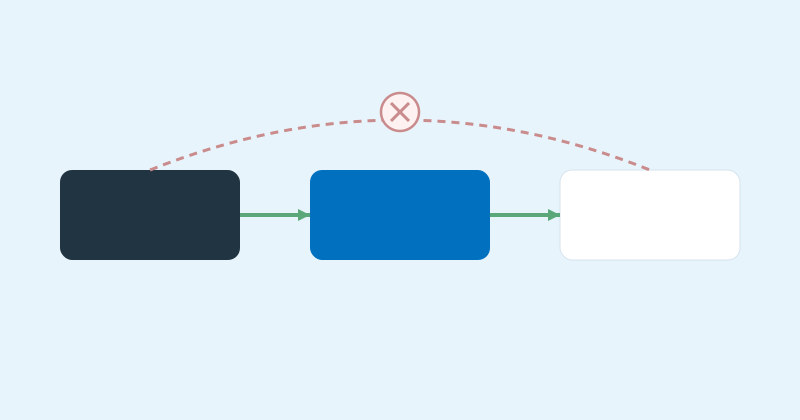
You will not outrank Amrod for its own name, and you almost never need to. Amrod sells to resellers, not to end customers, so on the searches that actually bring you orders it is not competing at all. Your real competition is the reseller down the road.
Amrod is not competing for your customers
You will not outrank Amrod for Amrod's own name, and you almost never need to. The searches that bring you customers are not the searches Amrod is competing for.
Amrod sells to resellers. Its website is built to serve resellers and to recruit more of them. The buyer looking for two hundred branded golf shirts for a company golf day is not who that site is trying to reach.
The searches Amrod owns
Some results are settled and there is no point spending effort on them.
Anything that is the brand name plus an action belongs to Amrod: the name on its own, the login, the account, the registration process, the branches. Those are navigational searches from people trying to reach Amrod, and Amrod's own pages answer them.
They are also, from your point of view, the wrong traffic. Somebody searching for the Amrod login is a reseller signing in to buy, or a jobseeker. Neither is going to place an order with you.
The searches Amrod does not want
Here is the part that resolves the worry.
Amrod does not sell to end customers. Its own site states that it supplies registered and approved resellers and not end users. A corporate buyer who lands there is told to go to a reseller.
So on the searches that actually matter to you, the ones where a company is looking to buy branded product, Amrod is not a competitor. It is not trying to win those results, and winning them would not help it.
The competition for those searches is other resellers. That is the real contest, and it is winnable, because most of them have no catalogue online either.
Where a reseller can win
Four kinds of search are open, and they are where the effort belongs.
Product and category searches with intent. Branded golf shirts, corporate gifts, promotional drinkware, branded workwear, each with a place or a quantity attached. Buyers search this way and suppliers do not compete for it.
Occasion searches. Year-end gifts, golf day prizes, conference giveaways, staff onboarding packs, safety compliance clothing. Buyers describe the occasion far more often than the product category, and almost nobody writes for it.
Local searches. A supplier serves the country. You serve customers who often want somebody nearby, or at least somebody who feels reachable.
Practical questions. What branding suits a soft-shell jacket, what a rush job realistically takes, what minimum quantities apply. You answer these on the phone every week and nobody has written them down.
Naming Amrod on your own site
Two separate questions get muddled here, and they have different answers.
Referring to a supplier factually is normal. Saying which range you carry, or writing a guide about how their catalogue works, is ordinary descriptive use. Amrod's trading terms permit resellers to advertise using its product images.
Building your identity on their name is not. A company name, a brand or a domain built around somebody else's registered trade mark is a different thing entirely, and it is a real legal exposure rather than a stylistic preference.
The practical line is simple. Their name can appear in your page titles, your headings and your text where it describes something true. It should not be your name. And a plain statement that you are independent, on a page a reader can find, costs nothing and removes any suggestion of a connection that does not exist.
When a customer mentions Amrod by name
It happens more now than it used to, because buyers research before they call. Somebody arrives having seen the range and says they want a particular product.
This is a good position, not an awkward one. The customer has already decided what they want, which removes the slowest part of most enquiries. What they need from you is availability, a price, branding advice and a delivery date.
Two things make that conversation easier.
An answer about supply that does not sound defensive. You hold trade accounts and can supply the range. That is the whole answer, and it is a stronger one than it sounds, because it is exactly what they need and cannot get themselves.
A page you can send them to. If your website carries the product with your price and an order grid, the conversation moves forward on its own. If it does not, you are back to building a quote by hand while somebody else sends a link.
The gap nobody is filling
There is an unusual opportunity here, and it comes from an ordinary technical decision rather than from anything strategic.
Amrod's own API documentation is built as a JavaScript application. A search engine or an assistant fetching that page receives a title, one sentence of description, and no content. Everything a developer would want to read arrives only after a browser runs the code.
Amrod also has no encyclopedia entry. There is no Wikipedia article and no Wikidata entity for the company, so the structured, machine-readable summary that exists for most established businesses does not exist here.
The consequence is that plain, factual, well-organised answers about how the Amrod catalogue works are genuinely scarce in the places machines read. That is not a gap you exploit at Amrod's expense. It is a gap you fill by being useful, and the beneficiary is the reseller who wants a straight answer.
It is also the reason the technical guides on this site exist. They are not there to win traffic, because those searches are small. They are there because the answers were not written down anywhere a machine could read them.
Questions we get asked about this
Will Amrod mind if my site ranks?
Amrod is a trade-only supplier whose customers are resellers. A reseller selling more is the intended outcome of the arrangement. Its trading terms permit resellers to advertise using its product images.
Can I outrank Amrod for its own name?
For the brand name alone, no, and it is not worth trying. Amrod owns its name and its own site holds those results. The useful queries are the ones alongside it.
Should I mention Amrod on my website?
Referring to a supplier factually is normal and lawful. Presenting yourself as Amrod, or building a brand or domain on their name, is not. Keep it descriptive and carry a clear statement that you are independent.
Do I compete with the free storefront Amrod gives me?
Not meaningfully, because it sits on Amrod's domain and carries no prices or ordering. It is a page about you rather than a competitor to you.
Last updated 9 September 2026. Sources and limits.
Put the catalogue on your own website
CatalogueConnect builds Amrod reseller websites with catalogue sync, reseller-controlled pricing and a bulk quantity grid. The website build is R18 999 once off.